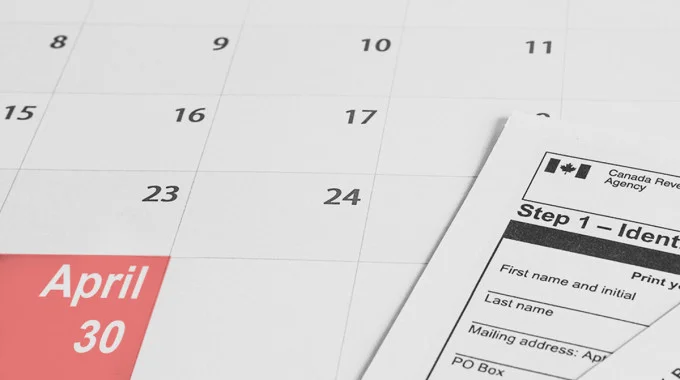
Deadline To File Taxes in 2026
Every person in Canada must file their own income tax and benefit returns each year. This year, every Canadian must file and pay their taxes by April 30, 2026. The filing deadline for self-employed taxes is June 15, in order to avoid penalties. Whether you’re one business day late, or a month late.
But just because the due date is in April – there’s no reason to procrastinate and delay getting your refund. The earliest date that the Canada Revenue Agency will start accepting electronically filed tax returns is February 23.
When To Expect Your Tax Refund
Government administrators are generally not known for their lightning-quick speed when it comes to processing documents, but when it comes to tax returns it’s quicker than you think.
Canada Revenue Agency will not guarantee a timeline, but they do have stated “goals” of getting your due money as long as you file before or at the deadline.
- If you file online, it’s the CRA’s goal to deliver your return within 2 weeks.
- If you file your tax-related documents by paper return, it’s the CRA’s goal to deliver your return within 8 weeks.
Of course, if for some reason they want to take a closer look at how you reported your income tax, in other words, “getting audited,” it can take much longer. There’s also a 16-week wait time if you’re filing from outside the country.

Documents Needed To Get Your Tax Return
Tax season can be stressful because you’re somewhat at the mercy of others to deliver documents to you in a prompt manner. Entities like your employer, bank or financial institution, charities, and political parties must deliver tax documents that enable you to fill out your income tax return.
The deadline for your employer to send out tax forms, such as a T4 information slip, is the last day of February. Most employers will have this available prior to the end of the month, meaning you can get a jump on filing that return sooner rather than later. You can do this whether you use a tax professional or not. Plus, either way, you can select the best payment options if you owe money.
What To Do If You Don’t Receive Your T4
If, for some reason, March comes around and you still haven’t received your T4 from your employer, you do have options. First off, if any employer lags on their duties, they can face penalties, so it’s definitely in their best interest to get you the forms in time. However, if you’re not getting results, you might be able to obtain the forms yourself through My Account at the CRA website, where, hopefully, the form has been submitted directly by your employer.
Often, if a T4 doesn’t show up on time, it’s because an employer doesn’t have your most current contact info. Visit your HR department or give them a call to ensure your contact info is up to date.
How To File Your Taxes
If you filed your 2024 taxes on paper, the CRA will mail you the 2025 income tax paperwork by February 20. You can download and order forms and publications as of January 18, 2026, at canada.ca/taxes-general-package. You can also call the Canada Revenue Agency to order forms and publications. The contact number is 1-855-330-3305.
The various ways you can file your taxes electronically are too numerous to mention. Don’t be overwhelmed, though, because we’ve done the research for you when it comes to free tax software.
Of course, you can reference the CRA website for online help. Just make sure whichever tax software you choose qualifies for Netfile, the online tax filing system in Canada. There are plenty of resources available if you need guidance.
If you’re looking for a challenge, and want to do your taxes the old fashioned way (hard copy paper version), paper T1 returns can be filed to the following addresses.
Important Tax Filing Deadlines To Know
As we stated earlier, the filing dates for your taxes this year are:
- On or before April 30, 2026
- On or before June 15 for the self-employed
When it comes to these key deadlines, though, the filing and payment deadlines are different. The payment deadline is April 30, 2026, and the filing deadline is June 15, 2026.
It’s important to get ahead of these deadlines because the CRA will impose interest and penalties on any amount owed after these dates.
If, for some reason, you don’t think you can make these payment deadlines because of circumstances beyond your control, the CRA might waive any late-filing penalties or applicable interest in the case you owe a balance. Some exceptional circumstances include:
- Serious illness, accident, death of a family member, emotional or mental distress
- Financial hardship or inability to pay
- Natural or human-made disaster
- Civil disturbance or disruption of service (ie. postal strike)
If you’re filing late for no good reason other than you have a case of “procrastinitis,” then you could face a late-filing penalty of 5% on any balance owing, plus 1% of your balance owing for each month your return is late to a maximum of 12 months.
For those expecting a refund, your penalty will be missing a nice chunk of change deposited in your account in a timely manner.
RRSP Contribution Deadline
When filing with the Canada Revenue Agency (CRA), you also need to consider the RRSP contribution deadline, which usually occurs in late February. For 2026, this deadline is March 2, 2026.
Deductions And Credits You Can Claim On Your Taxes
When you go to file your personal income tax return, whether you have a simple tax situation or not, there are deductions that you can claim in order to reduce your tax obligations. These can be found in income tax packages or tax software if you do your taxes online.
It’s important to note that some of these deductions can be claimed early, and others are tax credits you’ll receive throughout the year. On top of your income, though, your marital status, outstanding balances and other factors will also affect these credits and deductions.
- Disability Tax Credit
- Canada Worker’s Benefit
- Multigenerational Home Renovation Tax Credit
- Work from home expenses
- RRSP Contributions
For self-employed Canadians filing self-employed tax returns, your taxable income can affect your taxes owed as well as what deductions you can claim on your individual tax returns. However, self-employed individuals can claim more than employed individuals, since they owe taxes when they file and not throughout the year.
How To Receive Your Tax Refund
If you haven’t already, sign up for direct deposit immediately so that your refund gets put straight into your bank account as soon as possible. This will save you time if you’re receiving other government payments like GST refunds or Canada Child Benefit.
In the scenario where nothing shows up in your bank account after the expected two-week time frame from filing, you can check the status of your income tax refund at the government’s My Account website. You will need the following info:
- Social insurance number
- Date of birth
- Amount entered as total income on line 150 of your income tax return from the previous year.
Need a cash advance until your refund?
Spring Financial offers personal installment loans of up to $35,000 and payment periods up to 60 months! Even if you have low credit, you can apply in 3 minutes and get the money e-transferred to your account within 24 hours!