When it comes to ideal ways to make large purchases, you can write a cheque, e-transfer, or a bank draft. These are also more secure options for gifting money, especially if you need to send it through the mail. If the purchase or the amount you want to send is over $3,000, a bank draft is one of the most common options.
How a Bank Draft Works
In Canada, bank drafts are similar to cheques, but the issuing bank guarantees the amount on the bank draft. When you go to your financial institution and request a bank draft, the funds are automatically debited from your bank account and placed in the bank’s reserve account until the recipient deposits them and transfers them.
This is different from a cheque, where the funds aren’t taken from your bank account until the cheque has been deposited. This means there’s no guarantee that the funds will be in the account, unlike with a bank draft. Bank drafts provide security to the payee and are simple for the payer to obtain. Plus, you can get them in a foreign currency if needed.
Bank Drafts and Alternatives
While we’ve already gone over what bank drafts are, let’s take a look at some bank draft alternatives that are still similar to bank drafts.
- Wire Transfer: A wire transfer is a way to send money electronically through a bank or other transfer service agency. Wire transfers often have low fees, and money can be sent anywhere in the world. These are also referred to as international money transfers.
- Money Order: A money order is similar to a bank draft. Just like a bank draft, the funds are secured from your account. The main difference between a bank draft and a money order is that you can cancel a money order before it’s been cashed, but you can’t cancel a bank draft once it’s been issued. They can also be purchased through a Canada Post post office.
- Certified Cheque: Certified cheques and bank drafts are similar in that they’re both guaranteed. The difference is that a certified cheque is a type of personal cheque that’s certified by the bank and requires the payer’s signature.
- Interac e-Transfer: e-Transfer is an easy way to send money across Canada. That said, you can’t cancel an e-transfer once it’s been accepted, and there’s a daily sending limit of $3,000, which makes it not ideal for very large transactions.
Depending on the size of the transaction you’re making, these options are just as secure as a bank draft. That said, there’s no guarantee with any option; you just want to choose the most secure option based on your circumstances.
Getting a Bank Draft in Canada
Getting a bank draft in Canada is actually pretty simple. All you have to do is go to your bank or financial institution and request one for a specific amount. When you request the bank draft, the intended recipient’s information will be added to the draft, as they’re the only ones who can deposit it.
Once you’ve requested the bank draft, the funds will be secured and withdrawn from your account. You’ll also be charged a fee of around $9.95 per each draft you request. This amount could vary depending on your financial institution. You may be wondering, can bank drafts be free? Well, some financial institutions will offer free bank drafts depending on the banking packages they offer.
How Long Does It Take to Get a Bank Draft in 2026?
Once you go to your financial institution and request a bank draft, you can get it the same day. When you request your bank draft, though, you need to be sure you have the recipient’s information. This is the information required to complete the draft and have the funds withdrawn from your bank account immediately.
When Bank Drafts Can Be Deposited
You can cash a bank draft immediately after it’s been processed. That said, the funds won’t be deposited into your bank account immediately. Because your bank secures the funds, it will take some time to verify that the funds are deposited into the correct account. That said, the funds are guaranteed by the issuer, so the wait time isn’t as long as it would be with a traditional cheque.
Once the payee deposits the bank draft, it can take up to 24 hours for the bank draft to clear and the funds to be deposited into the account. This may take longer than an e-transfer for small amounts, but for large transfers, it’s one of the fastest ways to transfer your funds safely.
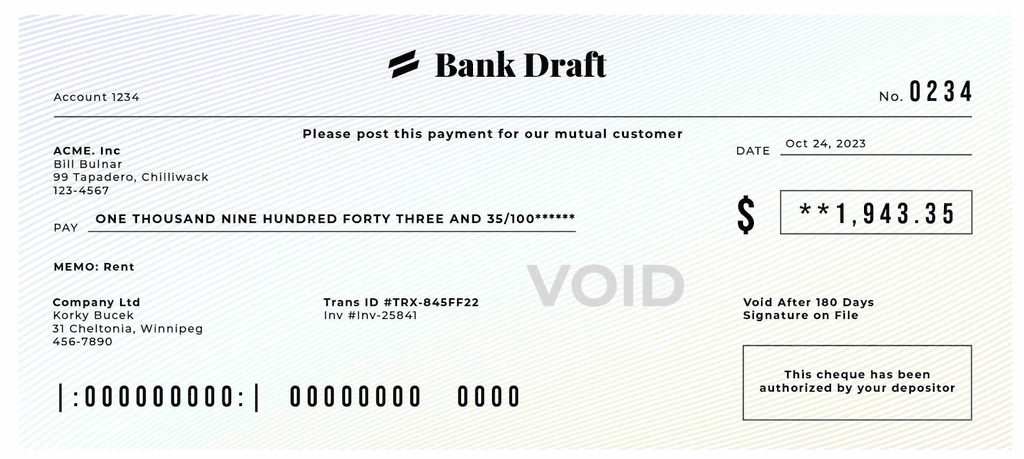
What Does a Bank Draft Look Like?
Bank drafts in Canada in 2026 can look similar to personal cheques. That said, though, it’s important to remember that every financial institution’s bank draft will look different. They’ll have their own paper and paper.
However, no matter where you get your bank draft from, they’ll all include the same information.
- The issuer’s name
- The amount of the bank draft
- The date it was issued
- The information of the receiver
It may even include the issuing financial institution’s information.
Here’s an example of what your bank draft could look like.
Bank Drafts vs Certified Cheques
As we already mentioned, bank drafts and certified cheques are similar. Both of these payment methods verify that the funds are in the account before they’re issued. That said, there are some differences. With bank drafts, the bank withdraws funds from the payer’s account and deposits them into the bank’s reserve account, also known as an internal account.
It’s then issued when the bank draft is cashed. With a certified cheque, the funds are held until the cheque is cashed. Neither of them can be cancelled once they’ve been issued, though. They’re both good options for big-ticket purchases. e, the funds are held, but they aren’t removed from the issuer’s bank account until the certified cheque is cashed. Neither of them can be cancelled once they’ve been issued, though. They’re both good options for big-ticket purchases.

Bank Drafts vs Cheque
With bank drafts and regular cheques, there are a few more differences than with a certified cheque. As we know, with bank drafts, the money is removed from the account when it’s issued and is deposited into the recipient’s account when it’s deposited.
A standard personal cheque is linked to your chequing account, but there’s no way to verify that there’s any money in it. The receiver won’t know if the payer has sufficient funds until they try to deposit the cheque. If the payer has insufficient funds, then the cheque could bounce. If this happens, the receiver won’t receive their payment. This makes bank drafts an ideal option for large purchases.
Depositing a Bank Draft in Canada
Depositing a bank draft in your account is relatively simple. As the payee, you take the draft to your bank or credit union, and the funds will be deposited into your account. Depending on the size of the draft, you may be able to deposit using online banking. That said, though, since bank drafts are normally used for large sums of money, they’re usually done in person and can take 1 to 2 business days to appear in your account.
What Happens if You Lose a Bank Draft?
Replacing a lost bank draft isn’t a simple process. In fact, when this happens, your funds are locked up because they’re guaranteed and cannot be cancelled. Before you can get a replacement, the lost bank draft has to be reported to your branch. You must also sign an indemnity agreement and wait for the mandatory holding period. This can delay the funds by several days, depending on the hold period rules.
Can You Cancel a Bank Draft?
To cancel a bank draft in Canada, you can’t just make a stop payment request like you would with a cheque. In fact, the bank draft can’t be cancelled once it’s been issued and handed over to the recipient. If you still have the physical draft, you can bring it into the bank and have the funds delivered to your bank account. Other than that, the only option is for the recipient to return the funds to you, since you can’t void a bank draft.
Do Bank Drafts Expire?
While bank drafts don’t become stale-dated after six months like cheques do, they can fall under unclaimed property after several years. That said, even though there’s no expiry date on drafts, banks can use their discretion to hesitate before they deposit very old drafts.
Another thing to consider in Canada is the Unclaimed Funds Policy. This states that if a draft remains uncashed for 10 years or longer, the issuing bank must transfer the funds to the Bank of Canada as unclaimed balances.
Verifying That a Bank Draft is Real
The simplest way to determine if a bank draft is really is by not cashing it at another bank. Going to the issuing branch with the buyer is always your best option. The teller can look up the serial number and verify the funds’ legitimacy. If this doesn’t work, you can also verify by calling the branch to confirm where the bank draft was issued and confirm that the funds are real.
Can You Deposit a Bank Draft Using Your Banking App?
Whether you can deposit your bank draft using mobile cheque deposit and remote deposit capture depends on your bank. You won’t have to worry about the access-to-funds policy that limits availability to the first $100, since the funds are guaranteed, but you may have to wait while they finish verifying with the issuing bank. You also don’t have to be concerned about endorsing the back.
Bank Draft Fees at Different Banks
When it comes to bank draft fees, where you get the draft will determine the cost.
RBC Draft Fee: $9.95 per draft
TD Draft Fee: $9.95 per draft
Scotiabank Draft Fee: $9.95 per draft
CIBC Draft Fee: $9.95 per draft
BMO Draft Fee: $9.95 per draft
National Bank Draft Fee: $9.00
Credit Union Draft Fees: $5.00 to $10.00
Business Bank Draft: $7.50 to $10.00
For USD bank drafts or other foreign-currency drafts, fees may be higher.
Common Bank Draft Scams to Pay Attention to
Since bank drafts used to be treated like cash, many people are used to paying tuition with a draft, paying the CRA, or buying a used car privately. However, they have recently been known for being used in:
- Counterfeit draft scams
- Overpayment scams
- Rental deposit scams
- Online marketplace fraud
To verify that the draft is authentic, pay attention to the draft’s serial number and security features, such as watermarks. You should also verify with the issuing bank before the draft is cashed.
The most common scam is when you’re given a draft that looks to be real due to microprinting, but isn’t. It seems fine at the teller, but it flags in processing. Due to business day cut-off times and weekend and holiday processing times, it could be days before the transaction is reversed and you realize you lost out on the money.
Can You Use a Bank Draft as Proof of Funds When Immigrating?
In some cases, bank drafts that can be converted into the destination country’s currency can be considered proof of funds for immigration settlement. However, sometimes you may be required to use a proof of funds letter as well as bank statements. Keep in mind, though, that any transactions completed over $10,000 are above the FINTRAC reporting threshold and will appear on a large transaction report. Hence, having proof of the funds’ origin is always a good idea.
Reasons to Use a Bank Draft
When you’re making a large purchase or looking to transfer large amounts, your payment method matters. Not only that, you want to be sure you’re using a secure payment method. While you can use a normal cheque to make a secure payment, the funds aren’t guaranteed to the seller. For big purchases domestically or abroad, bank cheques or bank drafts are more secure for the seller, since the funds are drawn directly from your account to verify that you have enough money.
Most banks will offer a bank draft when you’re trying to take out large amounts for real estate closing funds, escrow and lawyer trust accounts, or even purchasing a used car. Not only do they offer greater security, but they also allow you to access the full amount at once and keep it safe until it is deposited.
Things to Consider With a Bank Draft
One of the key takeaways you should think about is that bank drafts don’t always work for real life. Anything can be stolen, and to take out a deposit, you need a bank account. When you’re making a deposit into someone else’s account, and the recipient doesn’t have an account, this type of payment won’t work. You also need to consider the withdrawal and deposit limits by account.
If you’re a joint account holder, only one of you has to authorize the bank draft. Neither party’s consent is required. This is the same for signing a power of attorney, so it’s important to know who has access to your bank account.