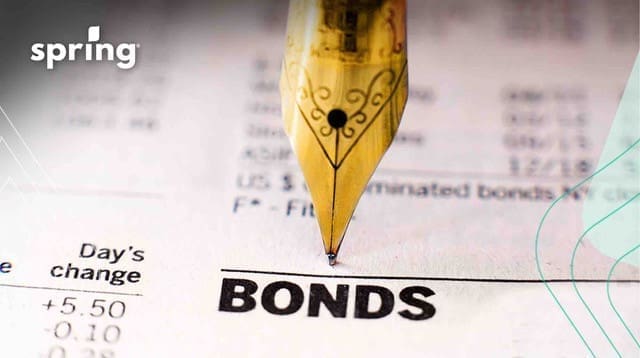
You may have heard of them, usually lumped in under stocks: stocks and bonds. While they are referred to that way, they are actually different from stocks. Simply put, stocks allow you to own a portion of a company, and with bonds, you are essentially only lending a company money.
What are Bonds and How Do They Work?
Since bonds are essentially a loan instead of buying into shares, the company’s profit margin doesn’t affect your return. You are lending the company money that they repay with interest, ensuring a return on your investment. Essentially, bonds are a way for companies to raise funds.
Unlike stocks, bonds are much lower risk. Especially if you hold onto the bond until maturity, they are considered the most common form of a fixed-income security. Fixed-income securities, also known as fixed-income instruments, are debt instruments.
The thing with bonds is that there is also a set date by which the amount must be repaid to you. When it comes to interest payments, most bonds pay twice per year, though this can vary depending on the bond you purchase.
Since bonds have fewer risk factors with return than stocks, you may be wondering why some still choose to invest in stocks. Well, that is because there is potential for a much higher return with stocks. Also, with stocks, you own shares in the company, so you can have some input as a shareholder.
Most investors invest in both stocks and bonds. Since bonds are less risky, they are a good diversifier. They are also a great way to earn some passive income.
What Kind of Bonds Can You Purchase in Canada?
In Canada, there are multiple types of bonds you can purchase. Just to name a few:
- Government of Canada bonds: These bonds are issued by the federal government and are considered the most stable to purchase. This is because the government makes timely payments, whether principal or interest. This is important for investors looking to generate consistent cash flow.
- Municipal bonds: These bonds are issued by a local government or a municipal finance authority.
- High-yield bonds (junk bonds): These are corporate bonds that represent debt. These bonds promise to pay interest and the full principal at maturity. The maturity date varies by bond.
- Investment-grade corporate bonds: These bonds have a lower risk of default, making them a safer investment.
- Strip coupons and residual bonds: Coupons are interest payments that are separated from government bonds. Residual bonds are bonds without interest coupons. These bonds are sold at a discount; however, they mature at face value.
- Provincial bonds: These bonds are considered secure investments because provincial governments issue them. Provincial and municipal bonds are the same in this sense.
Ways to Purchase Bonds
When it comes to bonds, there are two ways to purchase them. The first way is to purchase a single bond directly from a broker. We mentioned above that this would likely be a financial institution or a licensed financial advisor. That being said, there is a more accessible way to purchase bonds.
In Canada, instead of investing in one singular bond, you can also invest in a bond fund or bond ETFs. There are also bond mutual funds. These can also be purchased through any bank or brokerage, and are different corporate and government bonds already compiled into a profile.
They come as short-term and long-term, and you can choose how many shares you want to purchase. Since these funds, ETFs and mutual funds tend to be less risky, many investors also choose to add these to their portfolio.
How to Purchase Bonds through Canadian Banks
Buying bonds in Canada is actually pretty simple. You can either purchase them through a bond issuer (a private brokerage), a financial institution, or a licensed financial advisor. The process itself depends on where you are purchasing them. Keep in mind that you can also purchase foreign bonds the same way, not just Canadian bonds.
With any of these bond issuers listed below, you can also purchase bond funds, mutual funds and ETFs.
TD
In Canada, TD offers several types of bonds, including government and corporate bonds. They are sold as fixed-income investments along with GICs and money market instruments. When it comes to investing with TD, you can start your account directly online.
After that, you can transfer the funds into the account with the online bill payment or funds transfer feature. Once that is done, you can start building an investment portfolio. You can also call in to set up an appointment to create an investment account.
Royal Bank
The Royal Bank of Canada, RBC, has one of the largest inventories of bonds. Depending on the bond you purchase, there will be a commission fee of $25-$250. This is included in the quoted price. Unlike TD, with RBC, you need to book an appointment to open an account. You can book this appointment directly online, though.
Scotiabank
You can also purchase bonds through Scotia iTRADE. They have a wide variety of inventory and advertise their transparent prices with no markups or hidden fees. With Scotia i trade, you can open an account directly online and start creating your portfolio.
CIBC
Using CIBC Investor’s Edge is another way to purchase bonds. Using this platform, you either select Fixed Income Quick Picks or Buy Bonds. Fixed Income Quick Picks allows you to search for bonds based on the type of bond and years till maturity. Using the Buy Bonds feature, you can do a more advanced search. This includes searching by:
- Fixed Income Type
- Face Value
- Term Range
- Yield Range
BMO
With BMO, there are three different types of bonds that you can invest in: treasury bills, money market and coupons and residuals. To start investing, you can call or book an appointment online.
Wealthsimple
Wealthsimple offers a wide variety of investments to choose from. The great thing about Wealthsimple is that you can create your account and start building your portfolio completely online. They are also commission-free and offer $0 trades.
That being said, if you are an active trader or day trader, you can get a paid version of Wealthsimple that costs only $100 per month and is recommended if you trade more than $550 per month in USD.aid version of Wealthsimple that costs only $100 per month and is recommended if you trade more than $550 per month in USD. per month in USD.aid version of Wealthsimple that costs only $100 per month and is recommended if you trade more than $550 per month in USD.

Savings Bonds in Canada
In 1939, Canada first introduced bonds. These were known as victory bonds. These remained until 1945 and were used to fund the war. In 1946, Canada introduced the Canada Savings Bond program and the original Canada Payroll Bonds program. In 1996, the new payroll savings program was introduced. In 1997, the Canada RSP and the Canada RIF were introduced.
While these programs were available, you can no longer purchase them. The RSP and RIF became unavailable in 2010. The CSB and CPB were available to purchase as of November 2017. That being said, though, if you had purchased any of these before they were unavailable, you could still hold them until maturity. As of December 2021, all CSBs and CPBs should have matured and be redeemable.
To redeem any Canada Savings Bonds or Canada Payroll Bonds, you just need to show your certificate to your financial institution.
Best Bonds to Purchase in Canada
When purchasing bonds in Canada, the most recommended option is bond ETFs. They work similarly to traditional bonds, and all interest payments that you earn are deposited directly into your brokerage account.
Like traditional ETFs, there are management fees as well as operating costs that are included in the ETF’s MER (Management Expense Ratio). They can also be found on the stock market.
Here is a list of the top 5 bond ETFs in Canada.
1. iShares Core Canadian Universe Bond Index ETF (XBB)
This is a BlackRock iShares Canada ETF. It is listed on the TSX (Toronto Stock Exchange) and is a low-cost, fixed-income ETF. It provides exposure to the investment-grade bond market. The reason this is such a highly rated fund is that it is low risk and consists mostly of government bonds. It also has a relatively low MER of 0.10%.
2. BMO Aggregate Bond Index ETF (ZAG)
As you probably guessed, this is a BMO Canada ETF that also trades on the TSX. This ETF tracks the FTSE Canada Universe Bond Index. It also provides exposure to the aggregate Canadian investment-grade bond market. This is a high-yield bond ETF with a lower MER of 0.09%.
3. Vanguard Canadian Aggregate Bond Index ETF (VAB)
This is another bond ETF that trades on the TSX. This particular fund was designed to track the Bloomberg Global Aggregate Float Adjusted Bond Index and provide exposure to public investment-grade Canadian bonds. This fund also has a lower MER of 0.09%.
4.iShares Core Canadian Universe Bond Index ETF (XBB)
This fund seeks to provide income by replicating the performance of the FTSE Canada Universal Bond Index’s net of expenses. This is a low-cost bond that has broad exposure to the Canadian investment-grade bond market. It pays monthly and is designed to be a long-term investment. The MER on this bond is 0.10%.
5.iShares Core Canadian Short Term Bond Index ETF (XSB)
This ETF is known for its low volatility and high dividend payouts because its bonds mature in 1-5 years. This is why it is often held as a long-term investment. The MER on this bond is 0.10%.
I Bonds in Canada
I-bonds are a type of US savings bond. The reason investors purchase these is that they are designed to protect the value of money from inflation. While I bonds are U.S. bonds, Canadians can purchase bonds from the U.S. Treasury. That being said, they can also be purchased through ETFs.
Are Bonds a Good Investment?
Whether or not bonds are a good investment is up to you. That being said, they are less risky than purchasing stocks. However, there are some things that you should consider before you decide if investing in bonds is right for you.
Advantages
The good thing about bonds is that a lot of them are government bonds. This means they are low risk, so you are less likely to lose your money. They are also fixed-income, so you usually see returns on a biweekly or monthly basis.
This gives you a steady income, which isn’t always the case when you invest in stocks. Another great advantage of bonds is that you can purchase them through ETFs rather than individual bonds. This means that you can invest them in RRSPs and TFSAs in some cases.
Disadvantages
It is important to remember that because bonds are a safer form of investing, they have lower interest rates. This means you are likely to make less money off of them, but you are also less likely to lose.
Inflation is also something to consider when investing in bonds. In some cases, there is interest rate risk, and your rate of return may not keep pace with inflation. This means you could not make as much money as you would if you invested in a different asset.
You should also keep in mind that there are higher-risk bonds. These are often lower-quality bonds with a higher yield.
What Will Replace Canada Savings Bonds
While there isn’t really anything that will replace Canada Savings Bonds, now that they’re no longer being sold, there are replacements. You can get Treasury Bills, Guaranteed Investment Certificates, government-backed High-Interest Savings Accounts, Tax-Free Savings Accounts, and money market funds.
Typical Return of Bonds in Canada
How much you can get in return on your bonds depends on the frequency of your regular interest payments, or when you choose to sell the bonds. Your bond yields also depend on how many you have and how long you choose to hold them for. This will greatly affect the interest income. The bond’s maturity date also makes a big difference.
The type of bond that you have also makes a difference. Strip bonds, also known as zero-coupon bonds, accrue interest differently from other bonds. There’s also the inflation risk to consider, as well as market prices and asset classes. These can all affect what you’ll earn. Earning somewhere around 3% isn’t outside of the norm for bonds, though, since they’re relatively low-risk.
Can Bonds Be a Risky Investment?
The fact is, bonds can be a risky investment. With how bonds work, you may not find your traditional investment risks, but they exist. The first thing that can affect bonds is economic conditions, such as inflation and interest rate changes. If bond prices and interest rates rise after you get your bond, you could be missing out on predictable income. In this case, you could lose money, but a diversified portfolio can help to mitigate your risk.
Another risk with bonds is default risk. In this case, the bond issuer defaults on the bond and is unable to make interest payments or repay the principal. The greatest risk of this happening is with corporate bonds and companies with higher credit risk. However, as long as the issuer pays, you’re okay.
When holding bonds, even if you receive interest payments, the issuer’s credit ratings are a big deal. This can lower the market value of the bonds issued and cause you to lose money. Some other risks are liquidity, reinvestment and even call risks. If bonds aren’t traded frequently, they can be hard to sell at a fair price. If the rates drop, reinvesting your funds can also cause you to lose money. There’s also a risk of it being called, meaning it’s redeemed before it matures.
Using Bonds for Retirement Income
When it comes to using bonds for retirement, some fund managers recommend investing them in Registered Retirement Savings Plans. You don’t have to pay taxes on accrued interest and capital gains until you start using the funds for retirement income. While these can be used for a variety of debt securities, including exchange-traded funds, bonds are often overlooked for retirement income.
When it comes to bonds and retirement, getting investment advice from investment firms or other investment professionals is a good idea. They can help you with existing bonds, bond sales, and even secondary markets. They can even help you borrow money from existing funds to raise money for others.
How Rising Interest Rates Affect Existing Bond Prices
The inverse price-yield movement occurs when interest rates increase and bond prices fall. This happens because new bonds enter the market with higher interest payments, so the older bonds with lower rates are less attractive to buyers. This then forces their prices to be lower even more to entice buyers to purchase them. For bonds with longer durations, this impact is much more severe.
Bond Ladder Strategy for Steady Income in Canada
A bond ladder is similar to the staggered maturity strategy that’s used for GICs. The idea is to generate a steady income by purchasing a diversified portfolio of bonds with staggered maturity dates. As each bond matures, you can then sell bonds to get cash or reinvest them at the current interest rates. This strategy creates cash flow and reduces your interest rate risk.
Real Return Bonds Vs. Regular Government Bonds
The Bank of Canada real return bonds pay interest semi-annually on June 1 and December 1, and the rate you’re paid is adjusted for inflation. When the bond is issued, the Consumer Price Index level is applied to it; your payments every six months will then change with the rise and fall of the CPI.
Regular Government of Canada bonds, on the other hand, are fixed-income securities issued to raise funds. These are also considered safe investments because they aren’t affected by stock market volatility. They also provide regular interest payments that are guaranteed, and your full principal amount is returned to you at maturity. Your fixed interest is also paid twice per year.
Bond Interest Payments Taxed as Income in Canada
Just like other types of income, bond interest is taxed in Canada at your marginal tax rate. These amounts are taxed in the year they’re received or earned and reported on a T5 slip. Since these amounts are considered income, they aren’t taxed under preferential tax treatments like dividends and capital gains.
Best Bonds to Hold in TFSAs and RRSPs
If you’re going to hold bonds in TFSAs and RRSPs, some bonds are going to be better suited to invest in these accounts than others. Higher-yield tax-deferred bonds are ideal for RRSPs, whereas bonds with high growth potential or tax-free income needs are best for TFSAs.
Green Bonds That Are Available to Canadian Investors
Depending on what you’re looking for, there are plenty of green bonds available. Some of these include:
- Government of Canada Green Bonds
- Provincial Green Bonds
- Corporate Bonds
- Financial Institution Bonds
Reading a Bond’s Yield Curve
When it comes to yield curves, the one for government bonds is pretty important to the financial market. It can help determine any changes to the Bank of Canada’s policy rate and how they impact other interest rates in the economy.
A yield curve is essentially a line graph that relates the relationship between yields to maturity and time to maturity for several bonds. The curve this creates can help predict whether interest rates are expected to rise or fall.
A normal curve, when the curve is upward sloping from left to right, is the type of curve that is seen when the economy is growing. A flat yield curve occurs when the line is flat, indicating the economy is transitioning from expansion to a slowdown or from a slowdown to expansion. The inverted yield curve has a downward slope. This is typically observed when interest rates and inflation are low or declining, as during periods of recession.
Which is Safer: Corporate Bonds or Dividend Stocks?
While these are both great options, depending on how you wish to structure your investment portfolio, corporate bonds are considered to be safer. This is because they have a higher legal certainty of payment. Dividend payments, on the other hand, are voluntary and can be reduced or eliminated at any time. They also have higher equity market volatility than corporate bonds.
If you’re looking to protect your capital, the best thing you can do is choose corporate bonds. However, if you can tolerate more volatility, are investing long-term, or are just seeking higher returns, then dividend stocks could be the best option for you.
Currency Risks with Foreign Bonds for Canadians
The risk with foreign bonds is that a potential loss can occur when both the interest rates and principal amounts are converted into Canadian dollars. If the exchange rates are unfavourable, the movements can erase lower returns, which are pretty common with fixed-income assets. This movement can also turn what should be a stable income into a loss.
Minimum Investment Needed to Buy Individual Bonds in Canada
For individual bonds in Canada, the minimum investment needed is usually around $5,000 face value for both corporate and government bonds. It also usually has to be within increments of $1,000. Even if the bond minimum is $1,000, the minimum investment with most brokerages is $5,000.