How to Buy Gold
Gold is one of those investments that offers more than one way to invest in it. You can invest in gold:
- by purchasing in physical form
- by purchasing gold stocks or gold ETRs
- by trading gold in the financial markets as CDFs, also known as contracts for difference
Plus, even in times of economic uncertainty, gold is one of the few things people still rely on. The price of gold itself may change, but it’s still considered one of the most sought-after when it comes to buying precious metals.
Purchasing Gold in Physical Form
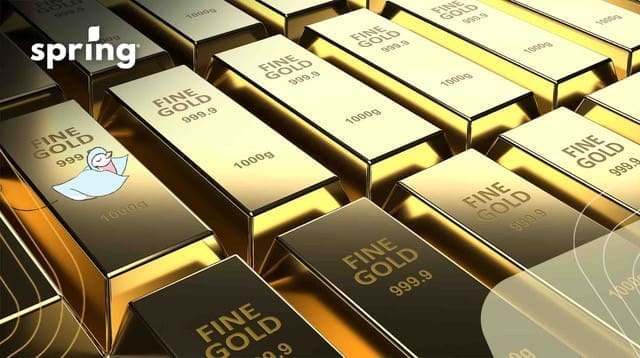
Purchasing gold coins and bars, also known as physical bullion, is a popular way to invest in gold. This is because your assets are tangible, making it much less risky than investing in the stock market. That being said, how you choose to invest in gold will depend on how much you are willing to spend.
If you choose to invest in physical gold bullion bars, you are likely to spend much more. This is because they are larger. The larger the bar, the more expensive it is. If you are looking to spend less or anticipate liquidating some of your assets, gold coins are a better choice. They are much smaller than gold bars.
If you decide to invest in physical gold, it is important to remember that there are limits on what you can purchase. If you are purchasing from a bank, most only allow you to purchase up to $10,000 worth every 24 hours. There is no limit on how much gold you can own in total, though. The government doesn’t monitor physical gold investment. However, each purchase will also come with gold certificates.
Purchasing Gold Stocks/ ETFs
Purchasing gold stocks or ETFs is different from purchasing physical gold. Instead of investing in the product itself, you are investing in the performance of the gold industry or the mining industry. This means your stock price doesn’t reflect the market value of gold.
When it comes to investing in gold, you have the option of investing in companies with gold exposure or gold-themed exchange-traded funds (ETFs). That being said, you don’t actually own the gold. The company you choose to invest in does. That doesn’t mean it’s not still a great idea for portfolio diversification, though.
While you don’t have to store the gold and worry about insuring it, there is a bit more risk involved. This is because you are no longer in control of the money you invested. You risk the price falling and the company going under. This would result in you losing everything that you invested.
How to Buy Gold Bonds
An alternative way to purchase gold is through Sovereign Gold Bonds. That said, these are government securities issued by the Reserve Bank of India. It’s also an interest-bearing bond that’s paid in two annual installments until maturity. Unfortunately, though, these bonds aren’t sold in Canada. That said, you can still invest in them using ETFs, which track their performance.
Investing Through CFDs
Investing through CFDs is a much riskier investment than the other two options. It doesn’t matter what you are investing in. It works because investors profit from bond price movements, regardless of direction. With CFDs, you are investing in the futures market, and while you can make money even if prices go down, it’s risky. Unlike stocks, ETFs, and physical gold, experienced investors often choose to invest in CFDs.
Banks in Canada That Sell Gold
If you are looking to buy physical gold in Canada, you can purchase it at some major Canadian banks.
- Royal Bank of Canada (RBC)
- Scotiabank
- Bank of Montreal (BMO)
- Canadian Imperial Bank of Commerce (CIBC)
- Toronto Dominion Bank (TD)
How to Buy Gold in Canada From the Banks
You don’t have to go to the branch when buying gold or other precious metals like silver. You can purchase gold online or through your online banking and get secure home delivery. As we previously mentioned, you can purchase up to $10,000 worth of gold in 24 hours at most major banks. The only bank out of these five that is different is TD. You can only purchase up to $2,999.99 worth of gold in 24 hours. If you are looking to purchase more than these amounts, you must purchase in person at the branch with 2 valid pieces of ID.
After you purchase the gold, you can either have it stored at the bank or store it yourself. If you choose to store it at the bank, it is stored in a custodial account at no extra charge. It is important to keep in mind that all the gold will be stored together, so you may not receive the exact pieces you purchased, but you will receive what you paid for. If you wish for the bank to store your gold separately, there will be an additional fee. The bank can charge you an annual fee, a flat fee, or a percentage of the gold’s value for separate storage. Depending on where you purchase the gold, you may also need to meet a minimum purchase amount.
That being said, no matter where you store your gold, you will want to insure it. These banks provide insurance for any precious metals they sell. Be sure to check with your bank directly to find out what their insurance policy covers. Is it included, or is it an extra cost? What does it cover?
Taxes on Gold in Canada
Paying taxes on gold works like any other commodity. You don’t have to pay taxes on what you own; you only have to pay taxes when the gold is bought or sold. Even if the resale value is high, you can earn long-term growth on bullion products for as long as you like.
Best Places to Buy Gold Besides Banks
If you don’t want to purchase your gold from a traditional bank or just want to look at your options, you can also purchase gold from other sources. That being said, if you want gold bars, also known as gold bullion, those are normally purchased from a bank.
If you are looking for gold coins, there are a lot more places that you can buy them, like:
- Pawnshops
- Individual sellers
- Private dealers
- Canada Post
- The Royal Canadian Mint
Is Jewelry Considered a Gold Investment?
It definitely can be, especially if the jewelry is antique. In the case of jewelry, though, you are likely to pay more than what the gold itself is worth. Sometimes, gold jewelry is also mixed with other alloys, so it isn’t always pure gold.
A good way to verify that the jewelry you’re purchasing is pure gold, not just for special occasions, is to buy it from a verified dealer. They will be registered with the Canadian Jewelry Association. Jewellers with this certification have signed a code of conduct that requires them to be honest about the nature of their jewelry.

Purchasing Digital Gold in Canada
If purchasing gold isn’t for you, you may be interested in investing in stocks. To do this, you would buy gold stocks from gold mining companies. That being said, though, you aren’t investing in gold itself; you are investing in gold companies. There are plenty to choose from, and they will be listed on the Toronto Stock Exchange (TSX).
When you are looking to purchase gold stocks or even ETFs, it is recommended that you start a brokerage account. As you probably know, there are plenty of brokerages to choose from. They allow you to keep a close eye on your investment. There are plenty of online brokerages that allow you to trade and buy for low to no cost, keeping your fees low.
That said, buying stock in a gold mining company involves more risk than owning physical gold. This is because you have no physical assets, and while gold is a more stable investment than others, it still comes with risks. You also have to remember that gold mining stocks don’t reflect the price of gold; they reflect the company that mines the gold. While gold prices may affect gold mining stocks, other factors are at play.
If you are looking to invest in stocks, there are a few top gold mining companies to consider. There are too many to mention, but included in this list are:
- Barrick Gold Corp
- Newmont Mining Corporation
- Franco Nevada Corp.
- Agnico Eagle Mines Ltd.
- Kirkland Lake Gold
Gold ETFs and Mutual Funds
Instead of investing in individual companies, you can invest in EFTs. Also known as electronic traded funds (ETFs) or mutual funds. When you invest in either of these, you are buying shares that are already bundled. Depending on the ETF or mutual fund you choose, it will either track the prices of gold stocks from multiple gold mines and refineries or track exposure to gold futures and options.
If you are looking for certain ETFs and mutual funds to invest in, there are far too many for us to list. That being said, let’s take a look at some of the most commonly mentioned ones.
- iShares Gold Bullion ETF
- BMO Precious Metals Fund
- CIBC Precious Metals Fund
- TD Precious Metals Fund
- iShares S&P/TSX Global Gold Index ETF
- BMO Equal Weight Global Gold Index ETF
Best Way to Invest in Gold in Canada
When it comes to investing in Gold, the best approach depends on how much you have to invest and what you are looking for in return. Investing in gold bullion bars is the purest way to invest in gold. It is also more expensive, but you pick and choose the size of bars you wish to purchase. Gold coins and jewelry are often filled with non-gold material, resulting in lower gold content.
Investing in stocks, ETFs, and ETFs/Mutual funds is another great way to invest in gold, but you should do your homework before investing. ETFs are often the preferred method of investing for beginners because they are already assembled portfolios. Individual stocks are a little riskier because all of your money goes into one company. If that company’s shares fall or the company goes under, then you could lose all of your money.
Should You Invest in Gold?
As we mentioned before, gold tends to be more stable than other investments. While the price of gold fluctuates, it is one investment that has the potential to maintain its value and even increase over time.
Plus, since gold goes by market value, you don’t have to worry too much about competitive pricing. You can gain exposure for as little or as long as you’d like and decide how much to invest based on your risk tolerance. If you don’t want to invest directly in physical gold and rely on secure storage, then you can also invest in digital gold.
Other forms of investing in the market can be highly volatile, making it difficult to rely on them to achieve your financial goals. For some, investing in gold can be a haven because one gram has a face value, no matter where you sell it. With digital gold, however, you can provide leveraged exposure based on future results.
Even with geopolitical uncertainty, Gold is one of the oldest and most stable forms of investing. In fact, gold coins are considered legal tender. It also provides diversification for your portfolio, helping stabilize your returns.
Risks of Investing in Gold
No matter which way you choose to invest in gold, it comes with risks. A few factors contribute to that risk.
- Inflation: When it comes to inflation, there is no guarantee that the price of gold will rise when inflation does. That being said, many investors will risk it anyway. Sometimes the risk is worth the reward. That is because inflation doesn’t predict gold prices.
- Politics: Many factors contribute to gold’s price. One of those is political events. These include wars, elections, and new government policies.
- Volatility: The price of gold changes over time. It constantly rises and falls. That doesn’t mean you can’t make money anyway. You just need to be careful when buying and selling. That being said, it is difficult to determine the price of gold.
- Insurance and Storage: If you choose to buy physical gold, keep in mind that there are additional fees. Depending on how you store the gold, there may be storage fees. There is also the cost of insurance to consider. Because gold can be very valuable, insurance protects you from loss and damage.
How to Trade Gold in Canada
When trading gold, the main way is through a futures contract. This is essentially an agreement to buy or sell the gold at a future date for a set price. You can settle these contracts with physical bullion or with cash.
Are Gold ETFs Taxed Differently from Physical Gold?
Since both of these things are considered to be capital property in Canada, both of these gold products are generally taxed the same. If they’re sold for a profit in non-registered accounts, so 50% of the capital gain is then added to your income and taxed at your marginal rate.
Holding Physical Gold in a TFSA or RRSP
To help with long-term wealth preservation, you’re able to hold physical gold in a TFSA or an RRSP. That said, if you do this, you’re unable to store the gold at your home or in a safe-deposit box. The gullion will need to be vaulted by an approved third-party trustee and meet strict purity requirements.
The conditions include:
- 99.5% purity or higher
- A London Bullion Market Association-accredited refinery must produce the bars.
- The Royal Canadian Mint must produce coins
- It must be held in a secure vault
How to Safely Store Physical Gold at Home
When you own physical gold, the best thing you can do is not tell anyone you own it. After that, avoiding easily accessible hiding spots is a good idea too. Investing in a heavy-duty safe that is bolted down and placed in an unusual location is also recommended. Some of these unusual locations include:
- Laundry rooms
- Pantries
- Closets
Spot Price Vs Premium on Gold
For Canadian investors, when it comes to purchasing gold, there are two different prices that you need to consider. These are the spot price and the premium. When you combine them, you get the price for physical gold.
Spot Price: The global wholesale market value of raw gold. This price fluctuates constantly.
Premium Price: The additional cost added to the spot price. This covers manufacturing, refining, shipping, and dealer markups.
Are Gold Royalty Stocks Better than Gold Miners
When it comes to precious metal investments, there are differences between investing in the Canadian stock market and gold mining. While tangible assets like miners can be more lucrative during gold price surges, investing in gold royalty companies and several gold ETFs can offer better risk-adjusted returns during market downturns.
Purchasing Gold from the Royal Canadian Mint
To have a diversified portfolio to maintain financial security, there are many different investments you can make. This includes purchasing capital assets, such as gold rounds, from private and government mints, such as the Royal Canadian Mint. However, you can only purchase collector, commemorative, and numismatic coins on their website.
When it comes to purchasing standard investment bullion, you must purchase through an authorized Bullion DNA Dealer. You can find one using the RCM’s official Bullion Dealers.
Gold Bullion Vs. Gold Coins
Just like other metals, there are multiple ways to purchase gold. That said, the two main ways to purchase the shiny metals are through gold bullion and gold coins. Here’s how they differ.
| Gold Bullion | Gold Coins |
| Best for long-term holding | Best for liquidity, smaller denominations, and collectibility |
| They have lower premiums than the spot price | They have higher premiums due to minting and craftsmanship costs |
| The liquidity is lower since large bars require more cash | Easy to sell to private buyers and global dealers |
| Usually 99.99% pure gold | Usually 22k to 24k |
| The sizes range from 1g to 1k or more | Usually 1oz, with fractional ownership also available |
That said, both of these give you direct exposure to the precious metals market.
Silver Vs. Gold as an Inflation Edge in Canada
When you’re choosing between gold and silver for portfolio allocation and direct ownership, gold is considered to be the safe-haven asset. In fact, gold is a traditional and stable store of value used by central banks and institutions to preserve purchasing power. Unlike other assets, gold is a safety net during currency weakness.
Silver, on the other hand, is considered to be the poor man’s gold. This is because it acts both as a precious metal and an industrial commodity. So, while it’s not considered to be a speculative investment, it’s not as safe an investment as gold.
Gold Storage Facilities and Vaulting Services in Canada
When it comes to private gold storage facilities and vaulting services, there are too many different options to choose from. Here are some of the most recommended:
- The Royal Canadian Mint
- Brink’s Canada
- IDS Canada
- TD Secure Storage
- Sprott Money
Capital Gains Tax on Selling Physical Gold
When you sell physical gold, the profit is treated as capital gains, so you aren’t taxed on your total profit. Only 50% of your profits are considered to be taxable income and taxed at your marginal tax rate.
Best Canadian Gold ETFs and Mutual Funds
Many investors choose to invest in ETFs and Mutual Funds, which often trade at lower premiums and some even pay dividends. This includes Solactive gold ETFs and Horizons gold ETFs. That said, here’s a list of some that are considered to be the best.
- Purpose Gold Bullion Fund (KILO)
- BMO Gold Bullion ETF (ZGLD)
- iShares Gold Bullion ETF (CGL)
- Sprott Physical Gold Trust (PHYS)
- Royal Canadian Mint (MNT)
- iShares S&P/TSX Global Gold Index ETF (XGD)
Final Thoughts
Instead of investing in the stock market and managing stock market volatility, you can invest in physical precious metals like gold coins and gold bullion. Another option is to purchase precious metal certificates, also known as cates (paper gold). You can purchase any of these from a gold seller or a bank that holds physical gold bullion.
That said, though, if you decide to add gold price to your investment portfolio, you can do so with gold investment options like gold company shares, gold ETFs, or other gold financial instruments. These investment returns will then be seen in Canadian dollars.
Before you invest in gold or other precious metals, though, it’s important to consider today’s gold price and its projected future value so you can make an informed decision. You can also speak to a broker or financial advisor about your options, for additional support and for information regarding other fees.